
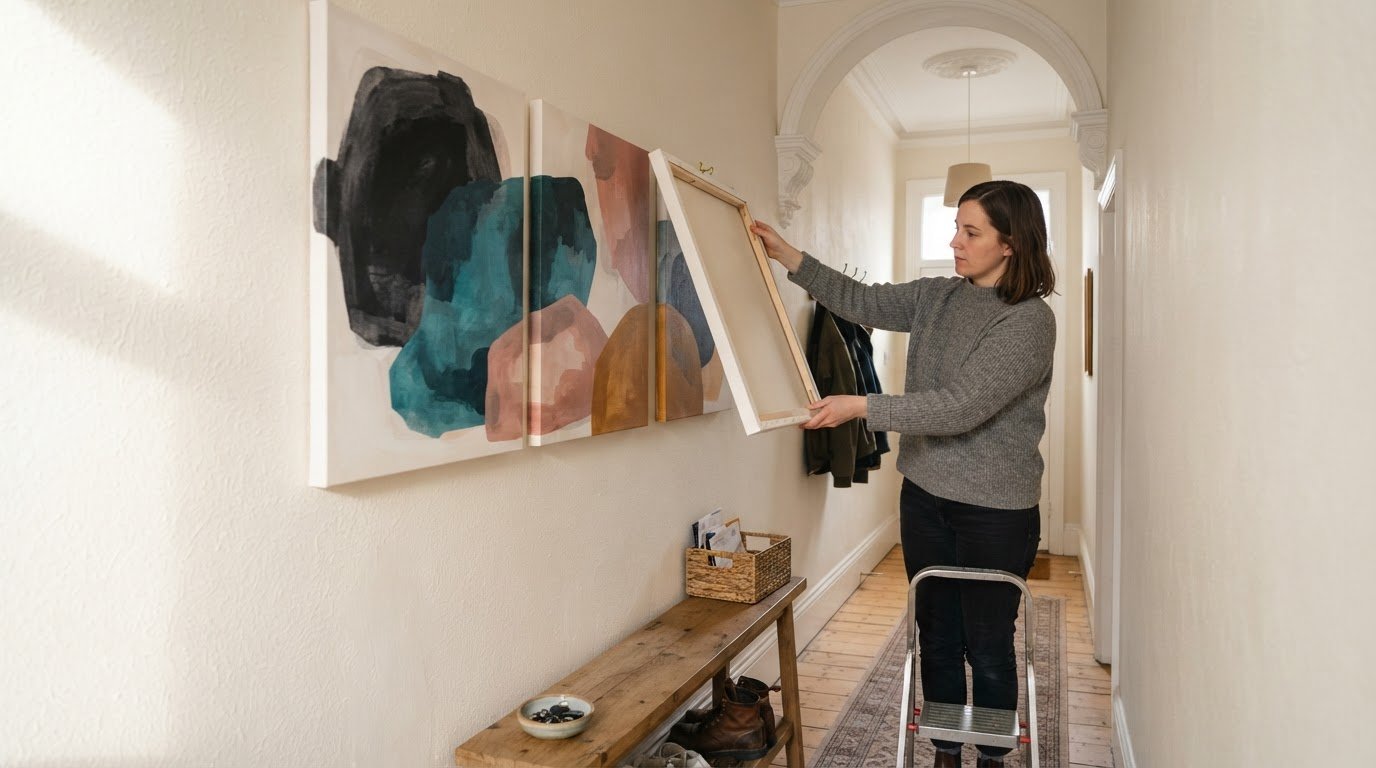
A triptych can sit above a sofa, sideboard or other furniture. Leave a clear gap between the furniture and the artwork; for high furniture, aim for 6-8 inches between its top and the canvas’s bottom edge. Learning how to hang a triptych canvas is mostly about getting that spacing, the panel gaps and the fixing points right.
It’s easy to worry that three separate panels will end up crooked or crowded. A simple layout plan helps you align them neatly and choose fixings suited to your wall. This guide explains how to hang a triptych canvas, covering eye-level positioning, placement above furniture, panel spacing and planning the layout before you start.
Key Takeaways
- Position the triptych’s centre around eye level, then adjust for the room and what sits beneath it.
- Keep panel spacing consistent; a gap of 2-4 inches can help the three canvases read as one piece.
- Choose fixings for your wall type. Picture hooks can provide stretched canvases with more long-term stability than nails.
- Plan from the centre outwards before making holes, so the panels line up neatly across the wall.
Hanging height and eye-level positioning
- Stand where you’ll usually view the triptych, such as opposite the sofa or near the room’s entrance. Use that everyday viewing position to judge eye level rather than measuring from the ceiling. Split canvases generally work best at eye level, unless they’re above furniture. This gives the three panels a natural place in the room.
- Find the centre of the middle panel before marking the wall. For artwork arranged in a row, place its centre a little above eye level. Treat the triptych as one composition, not three separate pictures. Step back to check whether the full scene feels balanced from your main viewing spot.
- Keep the top and bottom edges of all three panels aligned. Before hanging, lay them out together and compare their edges. Measuring each canvas separately from the floor can leave the panels at slightly different heights. Mark the intended positions along one horizontal line, then make small adjustments before fixing anything.
- Check the wall’s light before settling on the final position. Intense sunlight can fade artwork pigments or distort their colour temperature, so avoid placing the triptych where direct sun falls across it for long periods. If you use track lights or adjustable LED wall washers, aim them at a 30-degree angle to reduce glare and bring out details.
- Check the arrangement from across the room and from the doorway. Look for a tilted centre panel, uneven top edges or a composition that appears too high above the furniture. Don’t rely on a close-up view beside the wall. Stepping back makes alignment problems easier to spot while the fixings are still easy to adjust.
Can I hang triptych art above furniture?
Yes. Centre the complete triptych over a sofa or bed, then leave enough clearance above the furniture. For high furniture, keep the canvases’ bottom edge 6-8 inches above it.
-
Position the Triptych Above Furniture
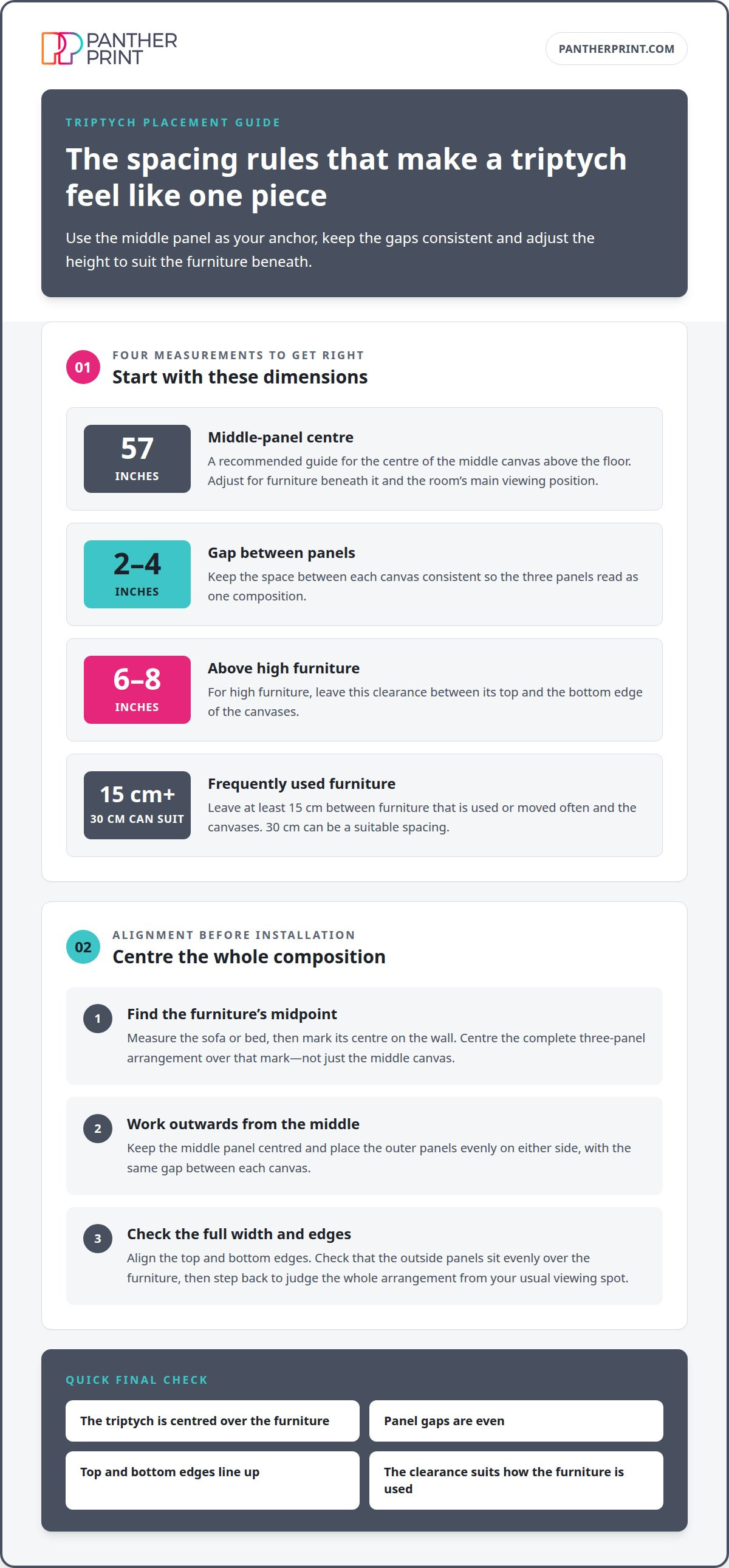
Centre the three-panel arrangement over the sofa or bed, using the furniture’s midpoint as your guide. Check the full width, not just the middle canvas, so the outer panels don’t extend unevenly beyond the furniture. From your main viewing position, make sure the arrangement looks balanced and doesn’t feel pushed to one side.
-
Set Spacing and Clearances
Leave a consistent gap between each panel, generally 2-4 inches. For high furniture, position the bottom edge of the artwork 6-8 inches above its top. A triptych’s middle panel centre is also recommended at about 57 inches above the floor. Treat that as a positioning guide, then account for the furniture beneath it.
- Measure the sofa or bed before marking the wall. Find its centre, then mark the matching midpoint above it for the triptych. Keep the middle panel centred on this mark and check that the outer panels sit evenly on either side. This avoids aligning the artwork to a nearby lamp or table instead of the furniture.
- Allow extra clearance above furniture that’s used or moved frequently. Leave at least 15cm between the furniture and split canvases to reduce the risk of knocking them off the wall; 30cm can be a suitable spacing. For example, a bed that’s regularly made may need more breathing room than a console table used mainly for display.
Picture hooks and wall anchors
On plasterboard, use wall anchors rated for at least 10-15 pounds. To minimise wall damage, plan each fixing point before drilling or hammering; conventional hooks and anchors still leave holes.
-
Choose Picture Hooks or Wall Anchors
Select picture-hanging hooks for a stretched canvas, as they provide more long-term stability than nails. Match each fixing to the wall and the canvas’s weight, and follow the fixing manufacturer’s instructions. For a three-panel arrangement, consider how each panel will be supported, rather than treating the triptych as one fixing point. Don’t rely on a nail alone for stretched canvases.
-
Hang the Triptych Safely on Plasterboard
Use anchors rated for at least 10-15 pounds when fixing into plasterboard or drywall. Check the canvas weight against the anchor’s stated rating, and use the correct fixing method for that anchor. Avoid placing a fixing in damaged or loose plasterboard. Secure each panel separately, so the support points match the positions and weight of the individual canvases.
-
Hang the Triptych Without Wall Damage
Mark the fixing positions carefully before making holes. Hold each canvas in its planned position and mark the hook or anchor point, then review all three marks together. This helps prevent extra holes from repositioning panels after hanging. Use removable pencil marks, and make each hole only where the chosen fixing requires it.
Position the fixings to match the canvas hardware rather than adding holes to correct a crooked panel. If you need to move a mark, erase it before making a hole. Once the triptych is up, gently lift each panel to check that it sits securely on its hook or anchor.
Planning layouts to save installation time
Plan the full arrangement before marking fixing points. A quick floor layout helps you spot spacing and alignment issues first.
-
Plan the Panel Layout
Lay all three canvases on the floor in their intended order, then measure the complete width. For medium or large triptychs, leave 2 to 3 inches between panels. On a smaller wall or narrow format, a 1.5-inch gap can keep the image feeling connected. Measure from the centre panel outwards, rather than starting at one side.
-
Arrange Panels Without Labels
Place the panels side by side and follow the image across them. Look for a continuous line, landscape feature or colour pattern that crosses the joins. If the picture has no obvious flow, try different orders on the floor and step back to compare. Don’t assume the panels belong in the order they came out of the packaging.
- Mark the chosen order on the back with removable notes, such as “left”, “centre” and “right”. Keep the labels small and clear of the visible image. This prevents panels being swapped as you transfer the layout to the wall. Recheck the picture’s flow before lifting each canvas.
- Make a positioning guide from a straight 4-inch strip of cardboard, three inches wider than the framed artwork. Use it to keep the planned panel spacing consistent as you mark positions. Check the strip against each gap, rather than estimating afresh for every canvas. A repeatable guide helps avoid uneven spaces and extra adjustments.
- Align the triptych’s midpoint with your chosen centre mark, then work outwards. For a gallery wall with multiple art sets, keep spacing consistent and align the sets’ midpoints instead of their edges. A pre-planned layout, template or spacing card can save up to 60% of adjustment time during installation.
Panther Print
Panther Print offers canvas wall art to suit different rooms and styles. Browse themes such as abstract designs, wildlife, nursery art and Banksy prints, then use these layout tips to plan how the artwork will sit on your wall. A balanced triptych starts with a subject and colour palette that work well together, followed by careful positioning and suitable fixings.
If you’re refreshing a living room, bedroom or child’s space, choose artwork that feels at home there before planning its position. When styling the rest of the space, adding complementary home goods from TopShop can help tie the whole look together. The right image can create a clear focal point, whether you’re styling one wall or adding to an existing display.
Contact Panther Print to discuss your canvas print choice.
Make the wall feel like yours
A triptych can do more than fill a blank wall. Let its colours and subject help set the mood, whether you want a calm bedroom, a lively living room or a playful child’s space. Once you’ve chosen artwork that feels right, a careful hanging plan gives it room to become part of everyday life.
Panther Print offers abstract canvas prints, Animals & Wildlife and Art for Kids & Nursery Art, giving you different directions to explore as you shape your space. Choose a design you’ll enjoy seeing each day. Once you’ve decided on your artwork and its position, these practical steps for how to hang a triptych canvas can help you create a finished feature.
Contact Panther Print to discuss your canvas print choice, then get ready to bring a fresh focal point to your home.
Frequently Asked Questions
How high should triptych art be hung on the wall?
Hang the triptych so its centre sits around the viewer’s eye level in the room. As a guide, position the centre of the middle panel about 57 inches above the floor. If the artwork is above a sofa or bed, balance its height with the furniture rather than relying on the floor measurement alone. Check the view from where you usually sit or stand.
How much space should I leave between canvases?
Leave a consistent gap of 2-4 inches between panels for a typical triptych arrangement. The right visual effect depends on the artwork and wall: a narrower gap can make the image feel more connected, while a wider one gives each panel more separation. Lay the canvases out first and compare the gaps from a few steps away. Keep both spaces even.
How should I use Triptych Canvas Prints?
Use a triptych to create one focal point from three coordinated panels. It can suit a wide, open wall where a single canvas might feel too small, or draw the eye above a key piece of furniture. Choose a wall where you can see the whole composition together. Consider the room’s colours and existing artwork so the triptych feels connected to its surroundings.
What type of hooks or mounts are best?
Choose fixings that suit both the wall material and the weight of each canvas. Picture-hanging hooks provide stretched canvases with more long-term stability than nails. On plasterboard, use wall anchors rated for at least 10-15 pounds and follow their fitting instructions. Support each panel at its own fixing points, rather than assuming one central mount will hold the arrangement.
How do you measure and space a three-panel canvas triptych?
Start with the centre panel, then measure outwards to position the other two. For medium or large triptychs, allow 2 to 3 inches between panels; smaller or narrow layouts can use a 1.5-inch gap. If you’re planning how to hang a triptych canvas, lay the panels out first and use a spacing guide to keep both gaps even before marking fixing positions.
How high should a triptych canvas hang on a wall?
For an open wall, place the composition’s centre around eye level, with the middle panel’s centre about 57 inches from the floor as a guide. If you’re deciding how to hang a triptych canvas above furniture, set its height to leave a balanced clearance above the furniture. Step back and assess the full composition from the room’s usual viewing position.