
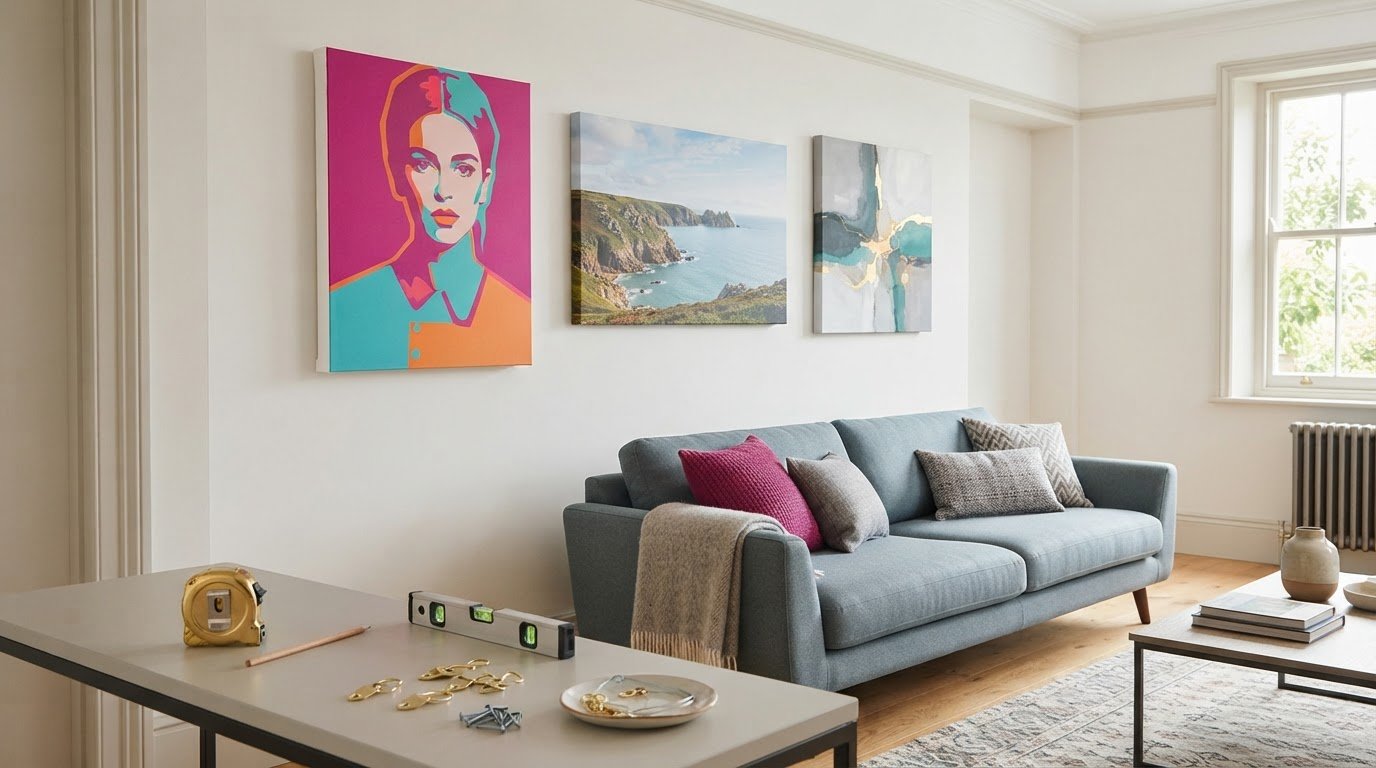
The biggest canvas isn’t always the best fit. Choose canvas prints for home by matching the artwork’s size and orientation to your wall, then consider how its thickness and edges will look from the side as well as the front. Measure the space before choosing, and plan where the print will hang.
It’s easy to focus on the image and leave size, shape and finish until later. Yet these details can determine whether artwork feels at home or overwhelms the room or gets lost on the wall.
This guide explains how to choose a canvas size, decide between portrait, landscape or square orientation, and assess how frame style and canvas depth affect the finished look. You’ll also find practical hanging tips to help you choose confidently and create a fresh focal point in your room.
Key Takeaways
- Match the canvas material and frame construction to the finish you want, and consider how the edges will look on your wall.
- Measure the available space before choosing a size, then pick an orientation that suits the wall and artwork.
- Plan the hanging position and fixings around the wall surface and the canvas, rather than relying on guesswork.
- Choose a subject and style that work with the room’s colours and mood, whether you want a calm focal point or a brighter accent.
- Compare canvas thicknesses from the side: depth changes the way a print sits on the wall and the presence it brings to the room.
Canvas materials and frame construction
Check the canvas surface, stretcher frame and finished edges before choosing a print. These details shape its texture, depth and appearance on display.
A canvas is stretched across a supporting frame, usually made from wooden bars joined at the corners. The bars hold the surface taut so the image sits flat. Check the product details for information about the frame construction and how the image continues around the edges. On a gallery-wrapped landscape photograph, for example, part of the scene may appear on the sides.
Canvas material affects how a photograph or printed painting looks. Its woven surface can give an image a softer, less glossy appearance than a smooth poster, while printed colour and fine detail still matter. If you plan to upload a photograph, choose one that’s in focus and detailed enough for the intended size. Preview the crop at the edges before ordering, especially if people or important details are close to the border.
Canvas prints differ from framed prints, posters and metal prints in both surface and construction. A stretched canvas has a fabric face and a frame behind it; a poster is a flexible sheet, while framed artwork has a visible outer frame. Metal prints use a different base material, so compare the finish and edge appearance to find what suits your room.
The total UK cost depends on the print size, canvas construction, any outer frame and delivery charges. Compare the full basket total, including delivery, rather than judging by the print price alone.
Before ordering from a UK canvas print shop, read the delivery policy for dispatch estimates, charges and what to do if a parcel arrives damaged. Check the returns policy for its return window, condition requirements and how it treats personalised uploads. Keep your order confirmation and photograph the packaging if damage occurs.
Frame Thickness and Floating Frames
Frame thickness refers to the depth of the stretcher bars behind the canvas. A deeper frame gives the print a more prominent side profile, while a slim one sits closer to the wall. A floating frame surrounds the canvas with a narrow visible gap, adding a border without covering its edges. Compare side views and measurements before choosing.
Framed and Unframed Prints
An unframed canvas shows its stretched edges and keeps attention on the image. An outer frame adds a defined border and can link the artwork with nearby furniture or existing frames. Check whether the image wraps around the sides or the edges are a plain colour. This changes how the print looks from different angles.
Canvas sizes and formats
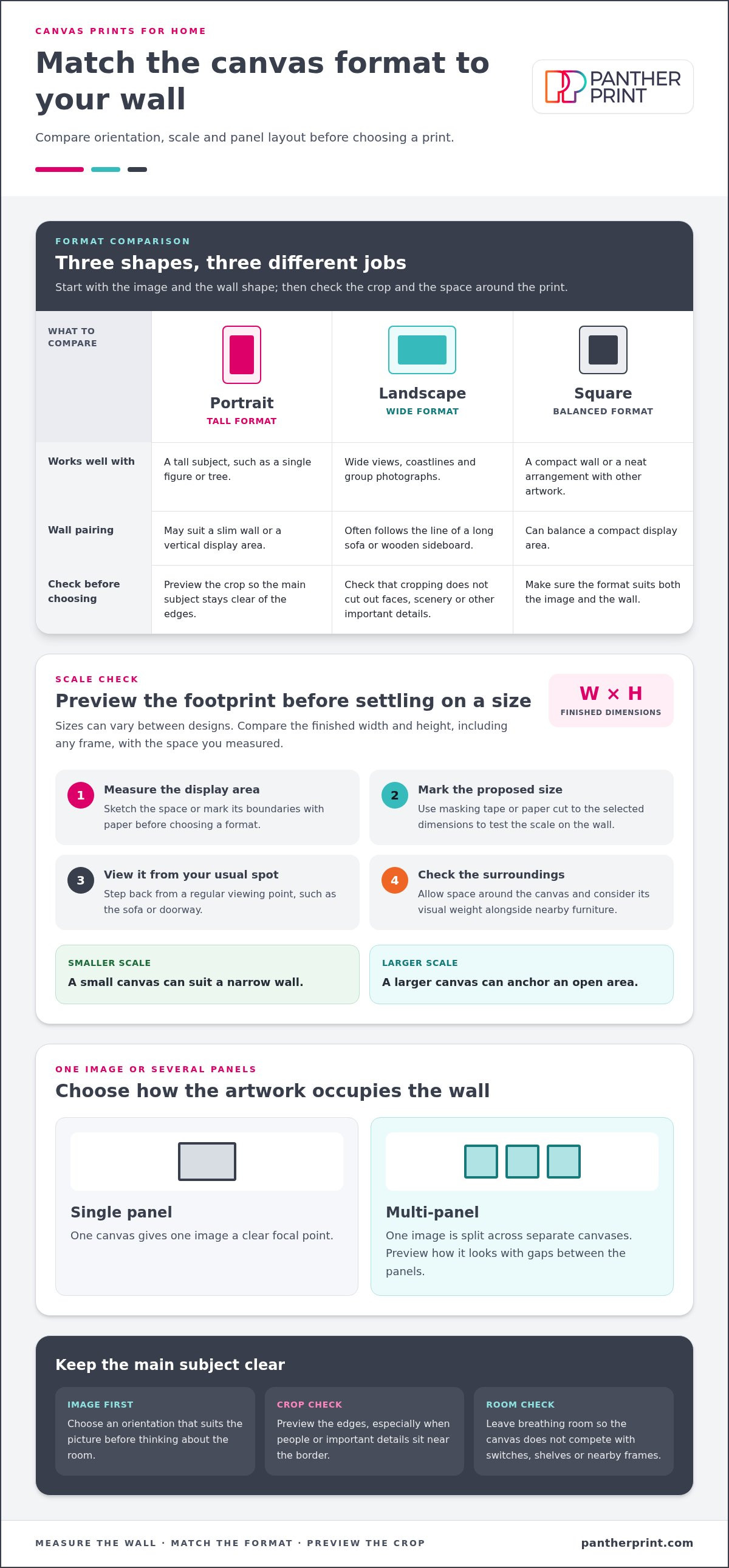
Choosing canvas prints for home starts with matching the picture’s shape and scale to the wall. Sketch the display area or mark it out with paper before choosing a format.
Available Print Sizes
Canvas size affects how much detail stands out and how much wall the picture fills. Browse the size options for the specific image, then compare them with the space you measured. Sizes can vary between designs, so don’t assume every image comes in the same dimensions. Check the finished width and height, including any frame, before deciding.
Test the scale by marking the proposed edges with masking tape or paper cut to the selected dimensions. Step back to your usual viewing spot, such as the sofa or doorway. If the picture will hang above furniture, consider the visual weight of both together. A small canvas can suit a narrow wall, while a larger one can anchor an open area.
Canvas Orientations
Portrait, landscape and square formats suit different images and wall shapes. Portrait gives a tall subject, such as a single figure or tree, room to breathe. Landscape suits wide views, coastlines and group photographs. Square formats can balance a compact wall or create a neat arrangement with other artwork.
Match the orientation to the image before thinking about the room. Cropping a favourite photo to fit a format may cut out faces, scenery or other important details. Preview the crop and keep the main subject clear of the edges. A horizontal picture often follows the line of a wooden sideboard or long sofa, while a slim wall may suit a portrait format.
Canvas Formats and Types
“Format” can mean the picture’s shape, but it can also describe how several canvases work together. A single-panel print gives one image a clear focal point. A multi-panel design splits an image across separate canvases, so check how it will look when the panels are hung with gaps between them.
Canvas prints also vary by subject and image source. A printed painting, photograph and abstract design each use the canvas surface differently. For a photo canvas, start with a sharp original and choose a format that preserves important details. Compare the preview with your wall outline before ordering.
Choose canvas prints for home by starting with the wall, not the product page. Measure the display area, shortlist sizes, then compare orientation and crop. Leave space around the artwork so it doesn’t compete with switches, shelves or nearby frames. Planning a group? Lay out paper shapes first and vary the formats only if the arrangement still feels balanced. This helps you judge the spacing and the overall effect from across the room.
Wall mounts and hanging instructions
Canvas prints can fade or warp when exposed to strong sunlight, damp or repeated heat. Hang them away from direct sun, moisture and radiators, and dust gently to protect the surface.
Choose a position that suits both the picture and the room. A landscape print might sit above a sofa, while a personalised photo canvas could suit a hallway or bedroom. Check the wall for switches, shelves and pipes before marking the display point. Hold the canvas in place and step back to see whether it makes a statement or competes with nearby artwork.
Next, identify the wall surface. Plasterboard and brick need different fixings, so choose hardware designed for both your wall and the canvas’s weight. A wooden frame may have a fitting attached already; inspect its position and make sure it sits securely. For plasterboard, use suitable plasterboard fixings rather than relying on a small nail. Masonry walls usually need a drilled hole and an appropriate wall plug.
For accurate hanging, use this sequence:
- Mark the intended position lightly with a pencil.
- Measure the distance from the canvas top to its hanging point.
- Transfer that measurement to the wall and mark the fixing position.
- Fit the chosen fixing, then hang the canvas and check its level.
When hanging a pair of photo canvases, mark both positions before drilling. This helps keep their tops aligned and the spacing consistent.
Take care with radiators. Heat rising directly beneath a canvas can affect its materials over time, so choose another wall where possible. Avoid hanging a print where steam or splashes may reach it, such as beside a shower or cooker. A dry, stable spot helps the canvas and wooden stretcher frame keep their shape.
Clean canvas gently. Use a clean, soft, dry cloth to lift dust from the face and frame. Don’t scrub the printed surface or use household sprays, as moisture and chemicals may mark the finish. If a mark won’t come off, stop rather than rubbing harder. Check the back and fittings occasionally, especially after moving furniture or redecorating.
For a personalised display, arrange paper templates on the wall before hanging the finished prints. This lets you test how a portrait looks beside a landscape, or how a small group sits above a console table. Once the layout feels right, mark each fixing point and match every fitting to the wall surface. Careful placement protects the print and gives the room a tidy, finished look.
Popular subjects and interior design styles
Choose a subject that belongs in the room, then use colour and composition to connect it with your furnishings. A botanical picture can soften a neutral bedroom, while a bold abstract design can add energy to a plain living-room wall. The right choice feels personal without clashing with the room’s existing details.
Start with the mood you want to create. Landscapes and muted photography can bring a restful feel to a reading corner; black-and-white images suit rooms with strong contrast. Floral designs add colour beside simple furniture, while pop art or graphic prints can create a lively focal point in a modern hallway. Pick one or two colours from the artwork to echo in cushions, rugs or painted walls.
Room style is a useful starting point, not a strict rule. In a calm, minimal space, a single large canvas can make a clean statement without adding clutter. A cottage-style room may suit flowers or countryside scenes, while a colourful child’s room can take playful illustrations. For a considered finish, keep the subject, palette and surrounding display deliberate rather than combining every favourite image.
A collage brings several pictures together in one display. Choose a shared thread, such as family photographs, coastal views or a consistent colour palette. Before hanging anything, arrange the images on the floor or use paper templates on the wall. Try a tidy grid with matching canvases or an informal grouping anchored by one larger picture. Keep the gaps visually consistent and check the overall outline against the furniture below.
Multi-panel designs divide one image across separate canvases. A wide seascape can flow across the panels, while a close-up photo may lose impact if its subject is split. Check the preview and panel order before choosing. Leave enough space between each piece and consider interruptions such as doorways or shelves. A strong multi-panel arrangement needs an uninterrupted display area.
Edge design affects how a canvas looks from the side. Wrapping a photograph around the edges creates a continuous image but can crop details near the border. A mirrored edge repeats the image’s outer colours, while a plain edge keeps the sides quieter. For a personalised canvas, inspect the full preview to make sure faces, lettering and other key details stay on the front.
If you’re using “my photo”, choose a clear, well-lit image with the main subject away from the edges. For a family collage, select pictures with similar lighting and colour so they feel connected. Compare the design with the room’s wall colour before deciding. These details help the display feel like a collection of artwork, rather than unrelated pictures grouped together.
Canvas print thickness
Canvas thickness is the distance from the printed face to the back of the stretcher frame. It changes the side profile, the gap from the wall and how substantial the print looks in a room. Check product dimensions for depth as well as width and height. A square canvas with a deep profile, for example, can look more prominent than a slim print with the same face size.
Depth also affects how artwork sits beside nearby objects. A canvas above a narrow console table may look balanced with a modest profile, while a deeper edge can give a large image more presence on a broad wall. Picture the print from the doorway, not just straight on. Its side edge may be visible in a hallway or beside a window.
The wooden frame behind the canvas gives the material its shape. Greater depth changes the frame’s profile, but doesn’t automatically make the printed image sharper or more detailed. Clarity depends on the original file and how well it suits the chosen print size. For photos, check that faces and key details look clear in the preview before ordering.
Use these checks to compare thickness options:
- Look at side-view images, not just the front-facing product picture.
- Compare the stated depth with nearby shelves, door frames and furniture.
- Check whether the canvas edge shows the image, a mirrored section or a plain finish.
- Consider how the chosen wall fixing will hold the canvas away from the wall.
A shallow profile can keep a group of prints visually light, especially when several canvases share a wall. A deeper profile gives a single landscape or abstract image more presence at the edges. If the room already has framed pictures, compare their side profiles too. Matching every depth isn’t essential, but a clear difference can make one canvas stand out.
Room layout matters as much as the material. Measure the available wall space, accounting for nearby switches, shelves and doorways. In a narrow passage, a deeper canvas projects further into the room. Above a bed or sofa, consider its profile alongside the furniture so the display feels balanced. These checks help you choose a thickness suited to the actual setting, not just the product photograph.
Before ordering, view the front and side details together and consider how the canvas will look from the room’s main entrance. Compare options in canvas prints for your room to find a subject and profile that suit your space.
Panther Print: Abstract Canvas Prints
Panther Print offers Abstract Canvas Prints for rooms that need colour, movement or a fresh focal point. Browse abstract designs alongside Animals & Wildlife, Art for Kids & Nursery Art and Banksy Canvas Prints. These subjects help you narrow your search by the room’s mood, from playful nursery walls to bold living-room displays.
Use the decisions in this guide to compare designs. Consider the available wall space, the image’s orientation and how its colours sit beside your furnishings. For a quieter room, look for an abstract image that complements your palette; for a livelier display, choose a subject that adds contrast. Then picture where the canvas will hang and how its profile will look in the space.
Explore Panther Print’s canvas designs to find artwork for your home.
Make your next wall feel like yours
Choose artwork that gives you a feeling you want to come home to. A favourite photograph can make a room more personal; a lively design can bring fresh energy to a familiar corner. Let the space guide your choice, then trust the image that feels right for your home.
Explore canvas prints for home and find a subject that suits your style. Panther Print offers Abstract Canvas Prints, Animals & Wildlife, and Art for Kids & Nursery Art, with ideas for shared spaces and individual rooms. Start with the wall you most want to change, and browse with its colours and character in mind.
Explore Panther Print’s canvas prints and take the next step towards a home that feels more like you.
Frequently Asked Questions
How do I choose the right size, orientation and frame for my space?
Choose a canvas that suits both the wall and the image, then consider how its edges will look beside your furnishings. A wide family photograph, for example, may feel cramped in a narrow portrait format. Compare the frame finish with nearby furniture or picture frames without needing to match every detail. A paper outline can help you judge the proportions before settling on a design.
How do I know if my photo will look good when printed?
Start with the original photo, not a small screenshot or a version saved from a messaging app. Zoom in to check that faces and important details look sharp. Then compare the image preview with the intended crop, especially around the edges. A bright phone screen can make colours look different from a printed surface, so choose a photo with clear lighting and balanced tones rather than relying on screen brightness.
What types of canvas prints are available for home interiors?
Options include ready-made designs and personal photographs printed onto canvas. Browse abstract designs, Animals & Wildlife, Art for Kids & Nursery Art, Banksy Canvas Prints, landscapes, floral images, famous artists and city scenes. A personal photo can turn a family moment, pet portrait or favourite view into wall art. Start with the room’s purpose, then choose artwork that suits its mood and the people who use it.
How do I choose the right canvas print size for a room or wall?
Consider the wall’s role in the room, not just its empty width. A print above a desk should leave space for lamps and shelves, while artwork in a dining area should be visible from seated positions. For a set, consider whether each image will read clearly from across the room. A paper mock-up helps reveal awkward proportions before your artwork arrives.
What materials and printing methods make a canvas print durable?
Durability depends on the canvas surface, the way it’s stretched and the print’s care after purchase. Look for a taut face, even edges and a frame that appears straight, with no loose corners. Keep the print away from persistent damp and strong direct sunlight, which can affect its appearance over time. Handle it by the frame rather than pressing fingerprints or pressure into the printed area.
How do I choose colours and artwork to suit my home décor?
Choose one colour already in the room, perhaps from a cushion, rug or painted wall, and use it as a visual link. Artwork doesn’t need to match everything. A black-and-white photograph can calm a colourful space, while a vivid abstract design can enliven neutral furnishings. Consider how the room is used too: a lively family area may suit playful imagery, while a quiet reading nook may call for a gentler scene.
How do I measure, hang and space canvas prints on a wall?
Measure the usable wall area, allowing for doors, switches and furniture that interrupt the display. For a group, place paper templates where each canvas will go, then view the arrangement from the room entrance and usual seating position. Adjust the layout until the images feel connected without crowding. Mark fixing points once it’s settled, and use a spirit level to keep the finished arrangement straight.
Are canvas prints supplied ready to hang, and what fixings are needed?
Panther Print’s canvas prints are ready to hang or display, so separate framing or artwork installation isn’t required. Choose wall fixings to suit the wall material and print weight. Plasterboard and masonry need different approaches, so match the hardware to the surface rather than using the same fitting everywhere. Check the canvas’s hanging point and make sure the fixing grips securely before hanging the print.