
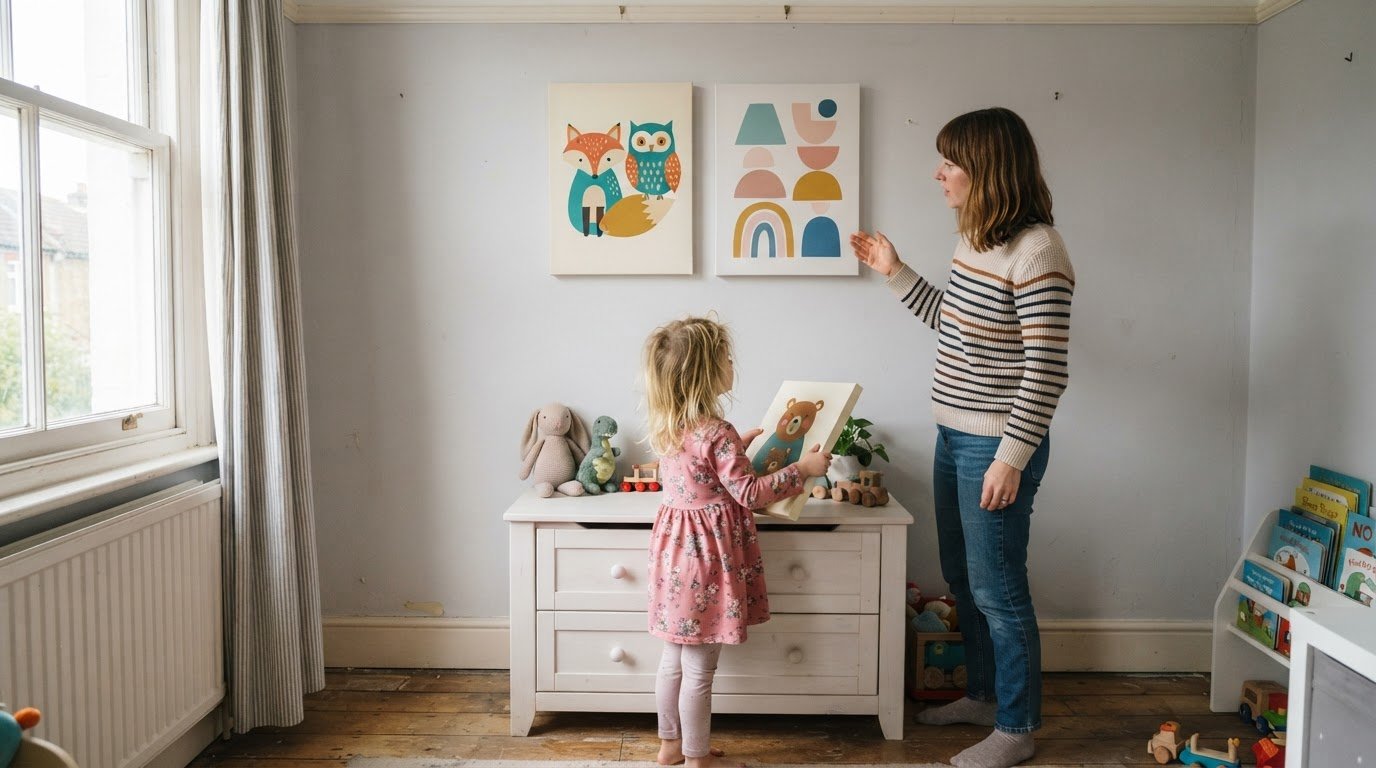
A child’s room can feel considered without being fixed to one age or stage. Art for Kids & Nursery Art is easiest to size when you start with the wall and furniture: centre artwork around 57 inches from the floor, and aim for a display about two-thirds the width of the furniture beneath it. If one print looks too small, group two or three together, leaving approximately 5 cm between frames.
It’s tempting to choose the sweetest picture for a nursery and leave the rest until later. A little planning now can help the room feel welcoming as your child grows, without turning every update into a full redesign.
Read on for practical ways to choose print sizes and hanging heights, arrange a gallery wall that’s easy to refresh, and pick age-appropriate artwork with lasting appeal. You’ll have a clearer plan for turning a blank wall into a cheerful, personal part of the room.
Key Takeaways
- Choose print dimensions with the wall, furniture and viewing distance in mind to create a balanced display.
- Build a gallery wall with a simple visual thread, so you can swap pieces as your child’s interests change.
- Use alphabet and number prints to bring a playful learning theme into the room without making the display feel cluttered.
- Explore clear, bold artwork for a newborn’s room, then choose prints that suit the atmosphere you want to create.
1. Choosing artwork size and hanging height
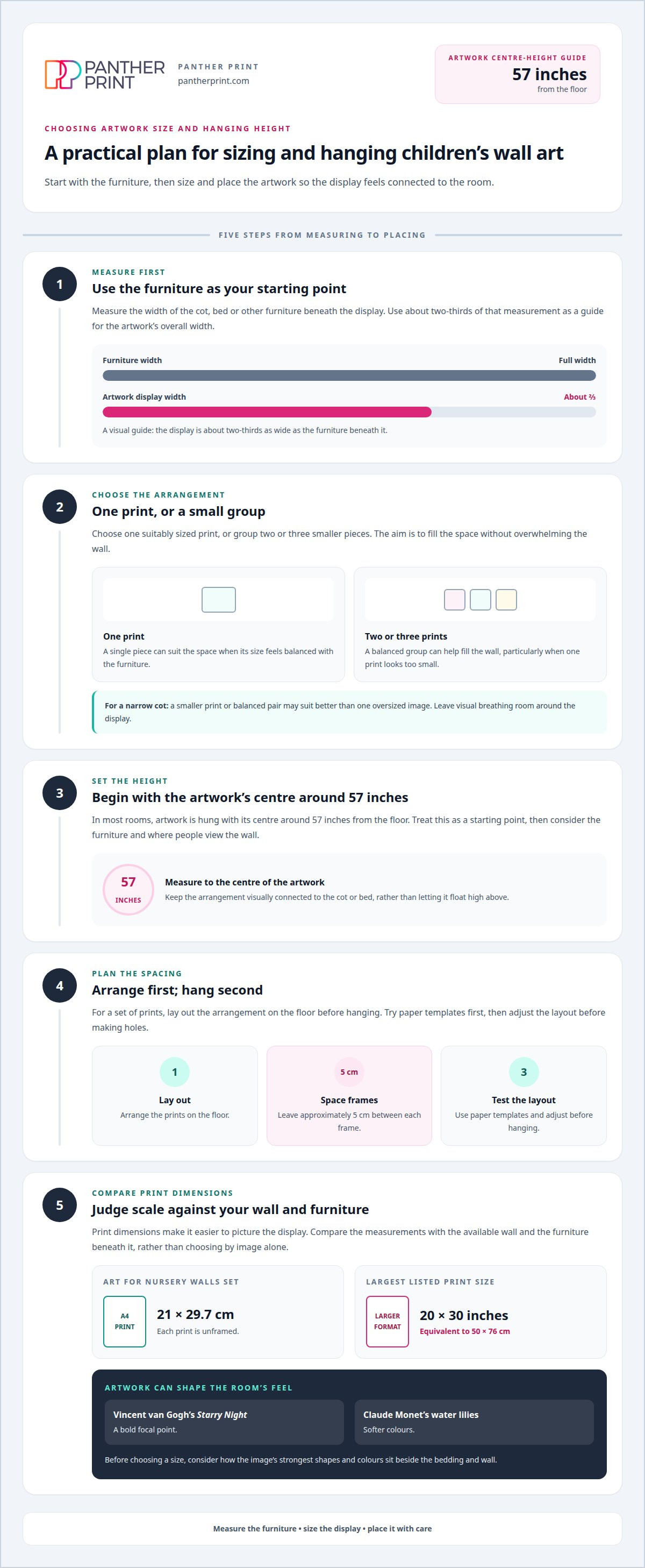
For prints above a cot or bed, aim for a display about two-thirds the width of the furniture beneath it. Choose one suitably sized print or group two or three smaller pieces to fill the space without overwhelming the wall.
Start with the furniture, not the print. Measure its width, then use two-thirds of that measurement as a guide for the artwork’s overall width. Above a narrow cot, for example, a smaller print or balanced pair may suit better than one oversized image. Leave enough visual breathing room around the display.
Height matters too. In most rooms, artwork is hung with its centre around 57 inches from the floor. Treat this as a starting point, then consider the furniture and where people view the wall. Keep the arrangement visually connected to the cot or bed, rather than floating high above it.
For a set of prints, lay out the arrangement on the floor before hanging. The product FAQ recommends approximately 5 cm between each frame. That gap gives separate pictures room to breathe while helping them read as one display. Try the spacing with paper templates first, then adjust the layout before making holes.
Print dimensions can help you judge scale. Each unframed print in the Art For Nursery Walls set is A4, measuring 21 x 29.7 cm. The largest listed print size is 20 x 30 inches, equivalent to 50 x 76 cm. Compare those dimensions with your wall and furniture, rather than choosing by image alone.
Famous artists and familiar artworks can add character without dictating the whole room. A print inspired by Vincent van Gogh’s Starry Night makes a bold focal point, whilst Claude Monet’s water lilies suggest softer colours. Before choosing a size, check how the image’s strongest shapes and colours sit beside the bedding and wall.
Children’s wall art with lasting appeal can keep a room from feeling babyish as your child grows, while leaving space for their changing tastes.
2. Gallery walls that adapt as children grow
Build a gallery wall around a flexible base: choose one or two frame colours, then mix illustrations, simple shapes and family photographs. A soft blue and natural wood palette, for example, can suit animal prints now and more grown-up artwork later. Choose themes with lasting appeal so the room can evolve without feeling babyish.
Place the display where it adds interest without competing with sleep or play. Above a dresser or reading corner, your child can enjoy changing pictures as their interests develop. Near a cot, avoid placing a heavy framed piece directly above the sleeping space. A lightweight canvas placed away from the cot is a more cautious choice.
Framed prints, canvases and wall decals each create a different effect. Prints offer crisp detail, canvases bring a soft-edged look, and decals are easier to reposition or remove. Near a cot, favour a lightweight option and keep it beyond your child’s reach as they grow.
For durable nursery art, consider the support and finish as well as the image. A canvas or paper print can work well when handled and displayed carefully. “Non-toxic” needs evidence about the materials and inks, so don’t rely on a product’s colour or appearance to establish it.
Nursery themes can include animals, stars, flowers, storybook scenes and simple shapes. Use these as starting points, then follow your child’s interests: a detailed wildlife illustration can still suit an older child. For a personal touch, a family photograph on canvas can become part of the display. Adding a name or birth details depends on whether the chosen format includes text.
In the UK, nursery wall-art costs depend on the print’s size, format and materials, so compare those details rather than assuming one set price. Children’s and nursery prints are available from online art shops as well as high-street retailers; browse by subject and dimensions to find a piece that fits your wall. Let your child choose a favourite animal or colour, then leave room to swap in new interests later.
3. Alphabet and number prints
Alphabet prints, number designs, illustrated letters and playful animal pictures all suit children’s bedrooms and nurseries. Choose artwork with clear lettering and familiar images, such as “A” beside an apple or “B” beside a bear. These simple pairings make the print easy to explore together.
Look closely at the lettering before choosing a design. Uppercase letters can feel bold and graphic, whilst lowercase examples look softer and more like storybook text. A print showing both forms, such as “A” and “a”, gives you an easy prompt to point out similarities. Choose a style that works with the room’s colours and furniture.
Number prints can turn everyday counting into a small shared activity. Choose a design that pairs a numeral with a recognisable group, such as three stars beside the number three. Clear spacing helps each element stand apart. A busy background can make numerals harder to pick out, so look for strong contrast between lettering and illustration.
Make the display personal through the images and colours you choose. If your child loves trains, a letter design featuring a locomotive can sit beside a number print with carriages. For a calmer nursery, try pale green lettering, simple leaves and a small selection of animal illustrations. Keep the visual style consistent, even when the subjects differ.
Use alphabet and number art as a starting point for conversation, not a lesson plan. Point to “M” on a print and name a nearby moon or toy mouse. Invite an older child to spot a favourite letter or count the pictured objects. These small moments connect the artwork to the room’s daily routines.
Before arranging several prints, choose a visual thread, such as matching illustration styles or a shared colour. A single alphabet print can stand alone above a book basket, while number and letter designs can join a wider display. As interests shift from bears to space, replace one picture and keep the rest of the arrangement familiar.
4. High-contrast prints for newborns
For a newborn’s room, high-contrast artwork can bring a crisp visual accent to soft furnishings. Try black-and-white shapes, bold stripes, a simple checkerboard or a clear outline of a familiar animal. These designs also give the walls a different feel from pastel bedding and gentle nursery colours.
Keep the composition easy to read from across the room. A large black circle against a white background is visually simpler than a crowded illustration with tiny details. If you prefer colour, pair two strong tones, such as navy and cream, and limit extra decorative elements around the main image.
Choose imagery that suits the room beyond the newborn stage. A graphic moon, a row of leaves or a striking zebra can remain part of the decor as your child grows. For a personal touch, combine one bold print with a family photograph or softer landscape, rather than filling every wall with equally busy designs.
Think about the viewing spot before choosing the final placement. A print near a changing area can be enjoyed during everyday routines, whilst artwork beside a reading chair can become part of shared story time. Keep the cot area visually calm, and position wall decor so it doesn’t interfere with the room’s practical use.
Check how a print looks in the nursery’s lighting. Daylight can make a pale background appear brighter, while a shaded corner may soften the contrast between black and white. The product FAQ recommends avoiding direct sunlight to help prevent art prints from fading. A spot away from a sunny window can help the image retain its appearance.
To bring a stronger graphic note into the room, browse black-and-white prints and look for clean shapes or striking contrasts. Choose a design that works with the cot bedding, curtains and other wall colours. The result can feel fresh and playful without relying on a nursery-only theme.
Panther Print: Abstract Canvas Prints
Panther Print offers art for kids and nursery art, abstract canvas prints, and animal and wildlife designs. Choose familiar animals for playful, story-starting images, or explore abstract designs when you want shapes and colour to complement the room.
Use the ideas above to narrow your choice: consider the wall, the child’s interests and how the artwork might suit the room as they grow. Panther Print’s range can help you find a print that feels at home in your child’s space.
Explore the selection and visit Panther Print online.
Make the room feel like theirs
A child’s room can change without losing its sense of home. Let your child’s favourite colours, animals and stories guide your artwork choice, and leave space for their interests to shift. Art for Kids & Nursery Art can be playful or calm, bold or gentle. The best fit is the one that feels right for your family and the room.
Panther Print offers Art for Kids & Nursery Art, Animals & Wildlife and Abstract Canvas Prints, giving you different directions to explore. Choose an animal illustration for a familiar favourite, or an abstract design to bring colour and shape into the space. Start with the mood you want the room to have, then browse for a print that suits it.
Contact Panther Print for help as you choose artwork for your child’s room. Take the next step towards a space that feels welcoming, personal and ready to grow with them.
Frequently Asked Questions
How do I choose age-appropriate colours and designs for a child’s room?
Start with the room’s existing colours, then choose artwork that adds a fresh accent without making the space feel busy. If your child is drawn to sea life, for example, choose a print featuring a favourite creature in colours that work with the bedding. Offer a choice between two designs so their personality shapes the room while the overall look stays balanced.
How can I hang nursery art safely above a cot?
The safer choice is to place artwork on a wall away from the cot, rather than directly above the sleeping space. Elsewhere in the room, choose a lightweight piece with no glass or dangling cords, and use a fixing suited to the wall. Follow the fixing instructions, keep small detachable parts out of reach, and reassess the layout as your child grows.
What materials and printing options are best for durable, non-toxic nursery art?
Canvas or paper prints can work well when handled and displayed carefully. For non-toxic art, look for evidence about the materials and inks.